

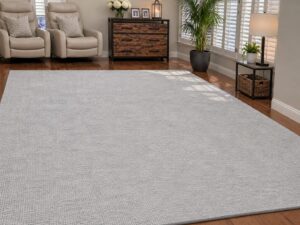
Yes, a heavily soiled white wool rug can be professionally cleaned, but the worst areas may need more than one pass. On this Annandale NJ job, some areas were cleaned three times to get an even, clean look across the whole rug. Our process was inspection, testing, dry soil removal, a wool-safe prespray, gentle agitation, controlled rinsing, thorough extraction, and careful drying.
We were called to a home in Annandale, NJ, where a large white wool rug in the living room, approximately 10 x 15 SF, had built up heavy, all-over soil, with darker traffic areas and several stubborn spots. White wool shows dirt fast, and wool holds soil deep in the fibers, so a surface clean wouldn’t have been enough. Here is exactly how we handled it.
Why did some areas need to be cleaned three times?
On heavily soiled rugs, the dirt isn’t evenly spread. Traffic lanes and stubborn spots hold more soil than the rest of the rug, and one pass often leaves those areas looking darker than the surrounding fibers. Rather than over-wetting the whole rug, we repeat the treatment and extraction only where it’s needed.
On this rug, some areas were cleaned three times. That let us bring the dirtiest sections in line with the rest of the rug without flooding the wool.
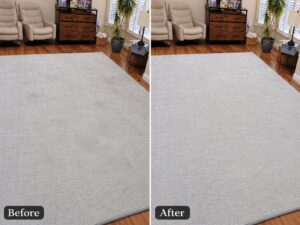
Before and after: the same white wool rug, same room, Annandale, NJ.
Why is a white wool rug hard to clean?
- Wool absorbs and holds water. Over-wetting can cause browning, color bleed, slow drying and odor.
- Wool is sensitive to harsh products. High-pH detergents and bleach can yellow or damage the fibers.
- Light colors show everything. Gray traffic lanes and uneven soil stand out on white.
- Aggressive scrubbing damages the pile. Gentle agitation protects the fibers.
How do professionals clean a wool area rug?
- Inspect the rug. We identify the fiber, construction and edges, check for wear, and note where the soil is heaviest.
- Test for colorfastness. We test a hidden area for dye stability and how the wool reacts to moisture. Nothing proceeds until the tests pass
- Protect the surroundings. We move items off the rug and protect the area around it. This rug sat on a hardwood floor, so we took care with moisture at the edges
- Dry soil removal. Most of the dirt in a rug is dry, gritty soil. We vacuum thoroughly so the wet step removes bonded soil instead of turning dust into mud.
- Wool-safe prespray. We apply a wool-safe cleaning solution with a pump sprayer as an even, light mist. It loosens soil without harming the wool.
- Gentle agitation and dwell. A soft brush works the solution in with light strokes, then it dwells so the product can break down the soil.
- Controlled rinse and extraction. We rinse lightly and make slow, repeated vacuum passes until the rug is damp, not wet. Pulling moisture out matters more than putting it in.
- Repeat on heavily soiled areas. Where soil is stubborn, we re-treat and extract again, up to three times on this rug, until those areas match the rest.
- Groom the pile . We brush the pile in one direction so it dries evenly and looks uniform.
- Dry with Airflow. We keep air moving over the rug. Wool dries slowly, and good airflow helps prevent musty smells and browning.

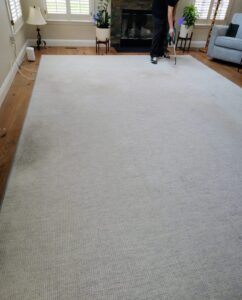
The result
The rug is clean, brighter and even in tone, including the areas that took three passes. Heavy soil is the kind of job where results come from patience, not from soaking the rug.
Frequently asked questions
Can a very dirty white wool rug be professionally cleaned?
Yes. White wool responds well to professional cleaning when the method is wool-safe and low-moisture. Very dirty rugs may need repeat passes on the worst areas, as this one did.
Why were some areas of the rug cleaned more than once?
Soil isn’t even across a rug. Traffic lanes and spots hold more dirt, so we repeat treatment and extraction only where needed, which avoids over-wetting the whole rug.
Does cleaning an area three times damage the rug?
Done correctly, no. Each pass uses a light, controlled amount of solution followed by thorough extraction, and we check the rug between passes. We wouldn’t repeat treatment if the wool showed signs of stress.
How often should a wool rug be cleaned?
About once a year for a rug in regular use. Clean more often with pets, kids or heavy traffic, and vacuum weekly in between.
Can you clean wool rugs at my home?
Yes. Zoliks cleans on site with portable equipment, so your rug stays in your home. If an inspection shows a rug needs a different approach, we’ll tell you before we start.
How long does a wool rug take to dry?
Drying time depends on the rug’s thickness, the room’s airflow and humidity. We give you specific drying guidance for your rug.
How much does area rug cleaning cost in New Jersey?
Pricing is based on the rug’s size, fiber and condition. Call (908) 521-8438 for a quote.
Keeping your wool rug clean between professional cleanings
- Vacuum weekly with suction only, with no beater bar on the rug.
- Blot spills right away. Don’t rub.
- Rotate the rug every few months so wear and sun exposure stay even.
- Use a quality rug pad.